


Interview with Jørgen Børresen Johansen, Refrigeration Manager at Thermocold KFD AS
When storing wine over time, it is important to create the most optimal conditions possible. Jørgen Johansen has spent the past 20 years working on product development for the cold room specialist Thermocold KFD AS. In recent years, much of his time has been spent developing new units and room solutions specially adapted for storing wine. As a result, Jørgen has ensured that Thermocold's wine rooms are designed to ensure that wine collections are stored correctly.
“When working on developing new products, you can’t just focus on the technical aspects. You also have to understand what the product is going to be used for,” says Jørgen. In this article, he explains some of the main points that are important to consider when storing wine for a long time. “If you don’t have time to go into the details, you should take the following advice with you when establishing good wine storage,” he continues.
1. Ensure a stable cool temperature, anywhere from 12 ° C to 16 ° C.
2. Try to maintain a humidity of around 65% RH (RH=relative humidity).
3. The lighting conditions should preferably be as dark as possible, avoiding UV rays.
4. The vibration should not be too high, most importantly for wine that is stored for a long time.
5. Odor can affect storage, so avoid paint and stain products with long off-gassing times.
6. Climate, space and good air circulation.
7. Room maintenance is important to ensure long-term quality
"I thought I could elaborate on the various points a little more for those who are a little more nerdy about wine aging," says Jørgen.
1. Stable temperature is the most important element
"The right temperature is normally determined by what you are going to store and how long it will be stored. NB! The topic here is not serving temperatures, but the right temperature for storage over time. You will probably find different answers to this question. In general, most people talk about 13 ° C as the absolute most favorable maturation temperature for both sparkling, white and red wine," says Jørgen.
"If the wine is stored too cold, the maturation process is delayed, from 13*C to 10*C makes a big difference in the maturation time, temperatures below 10*C can in some cases be detrimental over time and result in a further prolonged maturation process." At high temperatures, maturation can go too fast and the wine does not mature properly. I definitely believe that 13*C is the right core temperature for storage wine. This means that the air temperature will be from about 12*C to 14*C. If you want to estimate the temperature in a bottle of wine, you can easily measure the temperature by putting a thermometer in a glass of water that you put in the wine room. It should then be at 13*C. The temperature in the water represents the core temperature of the wine,” adds Jørgen.
Jørgen is concerned that temperature fluctuations are perhaps the biggest threat to good results. "You can store wine at 15*C for 10 years without any problems, often it is the rapid temperature fluctuations that can damage the wine the most. With a sudden change in temperature, the first thing that happens in the bottle is that the pressure changes. When you go from cold to hot, the pressure increases. The cork can then move out a little, which can expose it to air and lead to oxidized wine or loss of aroma or complexity."
2. Humidity is important, but you have some catching up to do.
When storing wine bottles for a long time, humidity is a pretty important factor. “Different bottles, types, corks and how the bottle is placed – standing or lying down – are things to consider. 50–75% RH is used as a safe range for wine storage. Approximately 65% RH is referred to as the optimum, but if you have 40% or 85% for a shorter period, they probably won’t have a big impact on the cork,” says Jørgen.
Jørgen is clear about the following: “Oxygen that is let in via the cork is the great enemy of wines, which is why it is important to have humid air so that the cork does not dry out.”
However, if your humidity is 90% or more, you should take steps to reduce the humidity. Mold and damage to shelves can quickly occur. The glue on the labels also does not tolerate such high humidity well and can come off.
"A simple tip for increasing the humidity in a wine room when the air is very dry (for example in winter) is to place a champagne cooler on the shelf and fill it with a couple of liters of water, which will evaporate and thus keep the humidity up," adds Jørgen.
3. The lighting conditions determine how long the wine can be stored in the room.
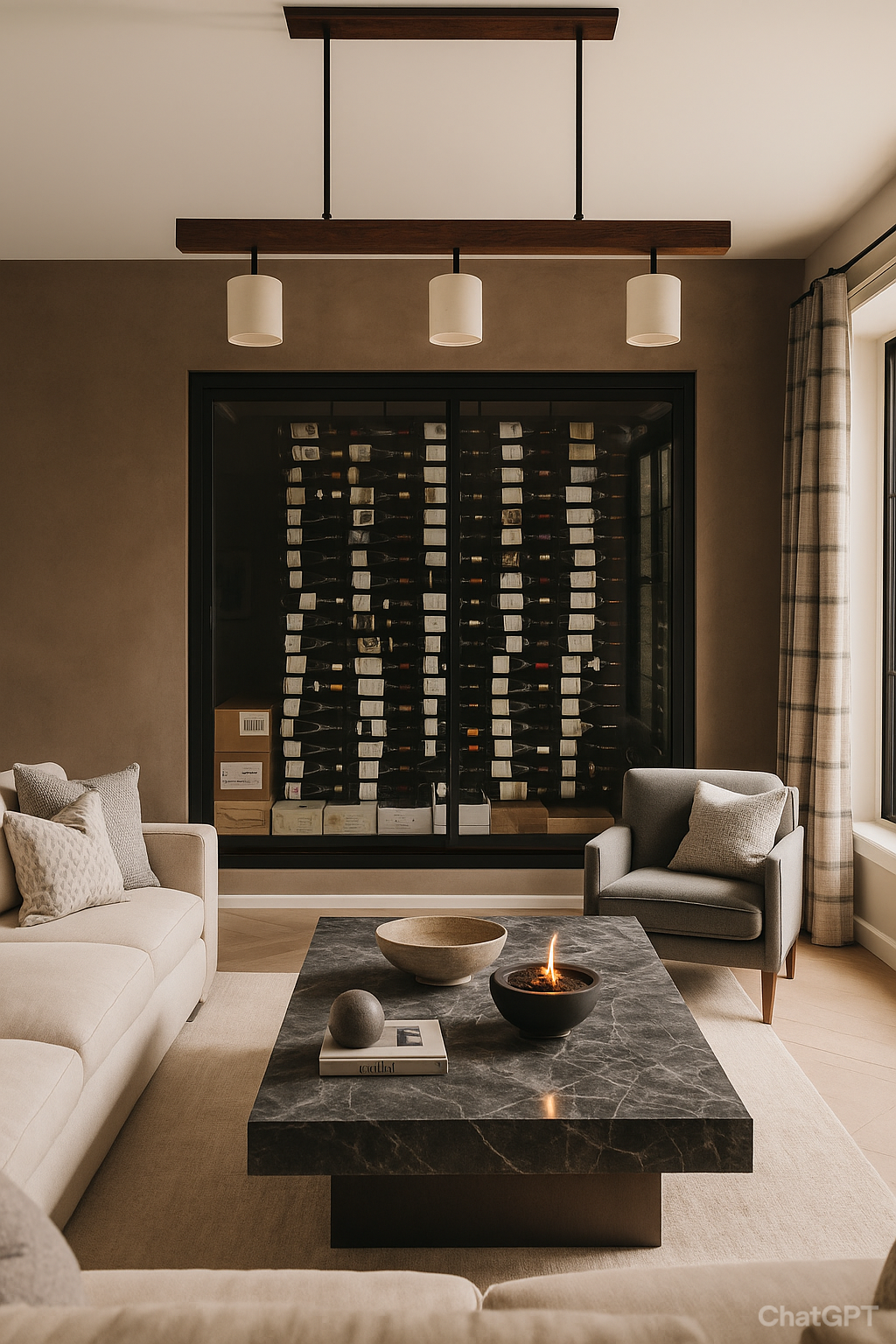
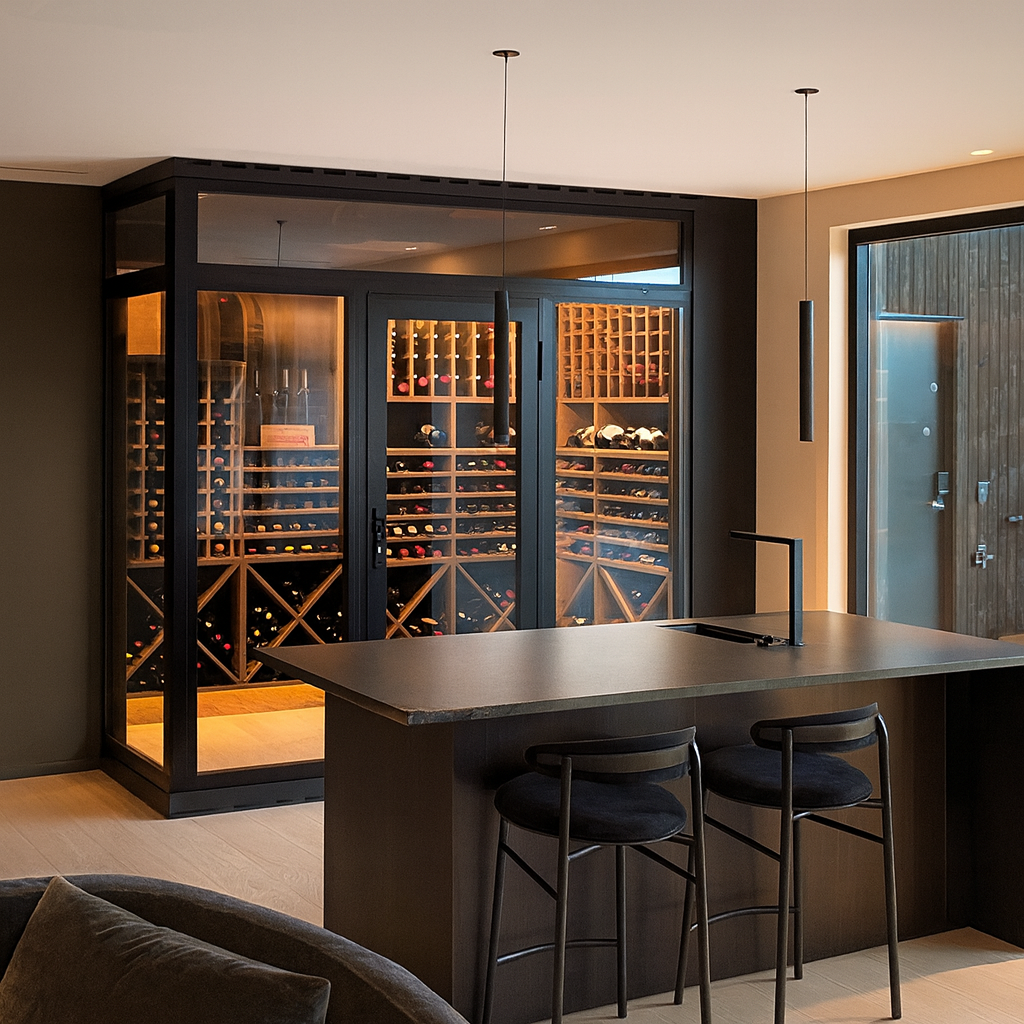
Thermocold has found that wine rooms with large glass walls or sliding glass doors are increasingly being used. Many customers are just as interested in displaying their wine as they are in storing it.
"Several of our customers are concerned that the wine should be stored in a piece of furniture that fits into the living room, the basement, or under the stairs. In that case, visibility through glass surfaces is an important part of the wine room," he says.
Rule of thumb no. 1: UV rays from the sun are what wine can tolerate the least, but light from interior lighting can also affect and deteriorate wines that are stored for a long time.
"In a wine room with glass panels, this is normally solved by storing the aging wine in boxes or covered instead of on open shelves. Recommended lighting in wine rooms is LED lighting that has less UV than traditional light bulbs. Limiting light in wine rooms is always a smart precaution. On glass panels, you can also install UV film that prevents UV rays from outside the room from entering. We often recommend that you add extra foiling to the glass panels as UV filters from many glass manufacturers do not block enough UV rays."
4. Vibration can affect wine over time
“Vibration is a topic that many people have slightly different opinions about, but vibration for short periods probably does not cause major damage. Wine is shipped and transported on boats and trucks that are in constant vibration. For those of us who often live far from the production areas, transportation by car or boat is a necessity,” says Jørgen. “But many people believe that reducing vibration is important when you store wine at home for a long time. One of the reasons for this is that vibration prevents sediment from settling.”
"In my search for more knowledge on the subject, I read that an experiment has been conducted on this with vibration that showed that vibration gave a slight reduction in tannins and increased PH, but to a very small extent and almost not measurable. The result also showed less acid in the wine that was exposed to vibration than the one that was stored quietly. However, the test said nothing about whether there was any difference in taste. The conclusion was that vibration does not destroy the wine, but can affect the wine to such an extent that it develops slightly differently. Therefore, vibration is a factor we take into account when we store over time."
5.Odor can be a factor for both wine and wine aggregates.
"Gases and odors in the room can affect both the wine and the wine room. Cork is a natural material that breathes to a certain extent. This means that the wine in the bottles emits certain types of gases that can escape into the room. The two types of gas that we know wine emits, and that we are most concerned about, are SO2 sulfur dioxide and CH3COOH acetic acid (also known as ethanoic acid). Jørgen adds, "The fact that they are in the air in a wine room is fine, but what we have to be careful about is that the concentration of the gases themselves does not become too high. This could damage both the wine and the wine aggregate, as these gases, if concentrated too high in the air, can corrode the metals and damage the wine aggregate and, in the long run, the wine."
"The solution is actually very simple," says Jørgen. "If you ventilate the wine room once in a while so that you get fresh air, the concentration will be lower. You can also use air filtration with an activated carbon filter and a carbon filter. Activated carbon filters absorb sulfur gases and activated carbon (especially impregnated carbon) removes acetic acid."
"Remember that the surroundings can also give off odors. We should preferably avoid treating wine racks and walls/ceilings with strong oil and paint products that have a long off-gassing time. Newly treated wine racks should be left to air/off-gas before placing them in the wine room," says Jørgen.
6. Air conditioning, fully insulated rooms and good air circulation.
When you put together the various factors described above, we can say something about the overall climate in the room. "The climate in the room is important, and here we experience differences from customer to customer. I see a big difference between a well-built wine room and a poorly built wine room," claims Jørgen.
"Thermocold has quickly become the market leader in wine rooms made from prefabricated insulated elements. We supply wine rooms in prefabricated insulated panels with a bacteria-inhibiting surface that are built with the same requirements as for cold rooms. This consistently provides a good climate," he says, adding, "Wine rooms and wine cellars with brick walls or concrete floors, poor insulation in the walls and or lack of moisture barriers in the walls, floors or ceilings often have a varying climate that can affect storage."
"Our experience is that it is often the last customer group that needs additional equipment for humidity regulation. Humidifiers and dehumidifiers as well as larger and more powerful wine units are common in such rooms to compensate for the fact that the room is not suitable for wine storage." It is expensive to purchase and operate.
"Mold thrives in climates with high humidity and is not something we want in a wine room. Harmful gases can also accumulate in the wine room since there is no ventilation in the room and the door is mostly closed, which means there is little air exchange."
7. Wine room maintenance is important over time
"Finally, we would like to say a few words about maintaining the wine room. The wine cooler doesn't require much, but a little love to ensure it functions optimally and lasts for many years."
The dust filter on most machines should be cleaned every 3 months or as needed. The rule is that it should be cleaned before it becomes clogged, not after it becomes clogged. It is also smart to replace the filter after a few years.
"If you have a humidifier or dehumidifier, these also need some maintenance, they are constructed a little differently, so you have to look in the manual for what the manufacturer recommends, but there is often a filter there too, but many require washing and cleaning in addition about every six months."
"Some wine units have condensation water pumps, either original or installed afterwards. These transport the condensation water away to a drain. As a rule, there is also a float chamber here that should be cleaned every 6 months and pipes that should be flushed."
"The wine room itself should also be ventilated once in a while so that you can replace the air and reduce the concentrations of gases that increase in closed rooms. You also benefit from regular washing of surfaces with clean water and mild soap, preferably with what we call wet mopping," concludes Jørgen.
Good luck with your wine storage project!

The dream of the perfect wine room
Refrigeration history from Norway and the world