

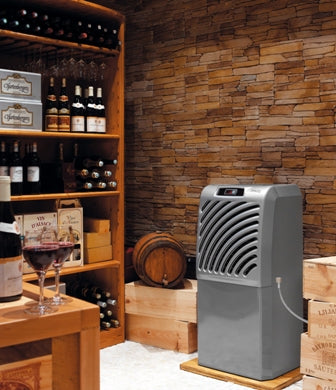
Here you have a method inspired by the Norwegian Standard (NS)
Before you get started…
Remember that the better the room is insulated and the tighter you can make it - the better the room will be. In a well-insulated room, you will have lower power consumption, sound levels and running time, and you can get by with a less expensive unit. You will most likely not need any dehumidifiers or humidifiers if the room is properly built.
It is smart to choose a large enough wine unit and an insulated door before you start construction. This will make it easier to determine the performance required, dimensions for light openings and solutions for ventilation to the unit.
It is important that you don't just build a wine room because you have the space. You should have considered the purpose of the room, the number of bottles, the desired location, the right storage conditions, the design and the desired temperature before you start planning. If all of this points to you being able to build it yourself, then just get started.
NS (Norwegian Standard) has a description of cold storage rooms that states how the cold storage room should be built according to the regulations. It is the same description that is followed for the construction of wine rooms. Here you will find out in quite great detail how to build the room itself. Some use 5cm instead of 10cm to save space, but in terms of price it does not make a big difference in material savings, rather a small increase in power consumption and in some cases the customer must have a more powerful unit due to poorer U-value in the walls.
To make it easier to understand what it takes to build a wine room yourself, we have created an example. In this example, we have taken the following as a starting point:
"You have a separate room in the house where you want to build a wine room. The desired temperature is somewhere between 12 to 15 degrees Celsius. You choose and build the wine room in a corner of the room against 2 outer walls. The ambient temperature is normal indoor temperature."
1. Aeration:
The walls that are against the outer walls, floor and ceiling are battened out by 5 cm to create ventilation. This is to create circulation between the walls to avoid condensation. If you want to light the openings when the room is finished, you must make holes or install grilles so that the air does not stagnate. In this way, the correct temperature is ensured around the cold room all year round. The tip is to create circulation of the air and not stagnant air around the room. If the room is built on the first floor on a concrete floor with a warm basement below, you can lay a vapor/moisture barrier directly on the floor, 5 cm insulation and a floating floor on top as a cold room floor, insulated floors are always recommended.
2. Moisture barrier:
Plastic foil/moisture barrier with a thickness of 0.20-0.25 mm is used to prevent moisture from entering walls, floors and ceilings. All joints are overlapped generously and the joints are completely taped so that no air can leak between overlapping plastic. This is very important. The tighter you can get the plastic, the better the wine room will be. The risk of a poor air barrier that does not seal can be fungus, rot and moisture damage to the walls, floors, ceilings and frost/ice in the unit. The plastic/moisture barrier is stapled to the outside of the battens we have against the floor, outer wall and ceiling. (Remember to tape over the staples in the plastic as much as possible)

3. Travel:
We recommend that it be built with space for 10cm thick rock wool mats, a well-insulated room is energy-saving and provides less operation/wear on the cooling unit. The frame is built of wood with a cc of 60cm, no diffusion-proof materials must be present inside the cooling room.
4. Insulation:
The walls are insulated between posts in the frame and against the moisture barrier/plastic. A typical problem in older rooms is that the insulation has sunk a little into the walls, which causes the insulation at the top of the walls to disappear. Therefore, make sure that the insulation is well-placed so that this does not happen.
5. Cardboard and panel:
Then we are ready to cover the insulation with wool cardboard, it is used to hold the insulation in place and prevent any odor. It should be attached to the studs before the interior panel is put on. The recommended type of wood inside the wine room is untreated spruce. (For example, treated panels can add taste and odor) I often get asked about using wet room panels, the kind that have finished surfaces with a tile look. Then you have to lay out 3 cm outside the wool cardboard, with openings at the top and bottom, you stop 5 cm from the floor and ceiling, so that ventilation/circulation occurs behind the panels. If you want to surface-treat the wood/panels inside the cold room, it is preferable to use a diffusion-open, water-based panel varnish. Remember that if you are going to treat the spruce panels, there is a great risk that the smell/gas from paint, varnish and stain can be great.
6. Floor:
The floor can be built in the same way as the walls and ceiling. If the room is built on the first floor on a concrete floor with a warm basement underneath, you can put a vapor/moisture barrier directly on the floor, 5cm insulation and a floating floor on top as a cold room floor, an insulated floor is always recommended.
7. Light openings in door and unit:
Guidance material for the unit and door is usually available on the manufacturer's website, and can be downloaded there once you have decided on the right type and model. Otherwise, this is included with the products.
8. Products from Thermocold:
Thermocold has been supplying both units, doors and shelving solutions for self-build rooms for decades. If you would like to know more about these products and our prices, you can visit the Thermocold website.
Good luck!
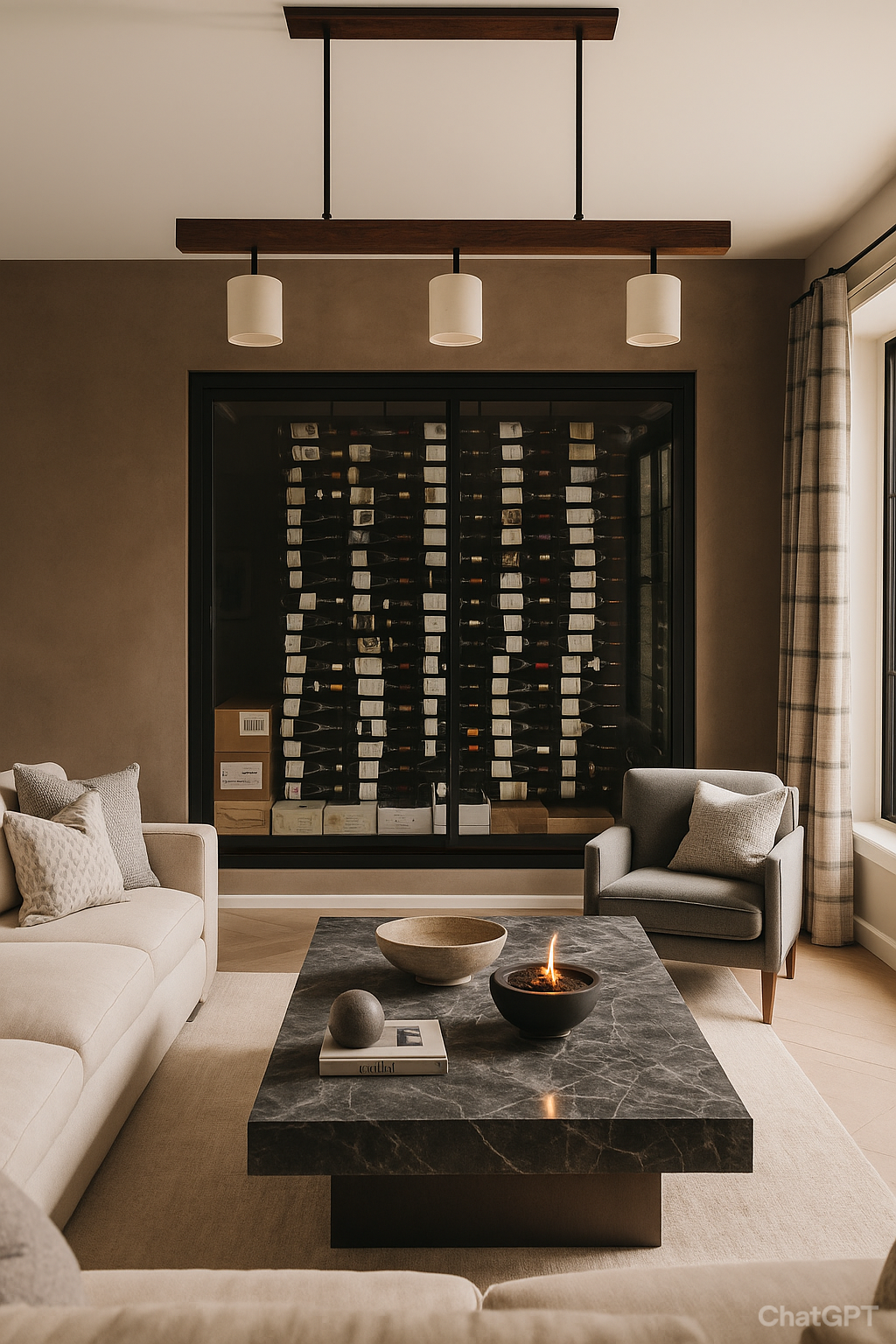
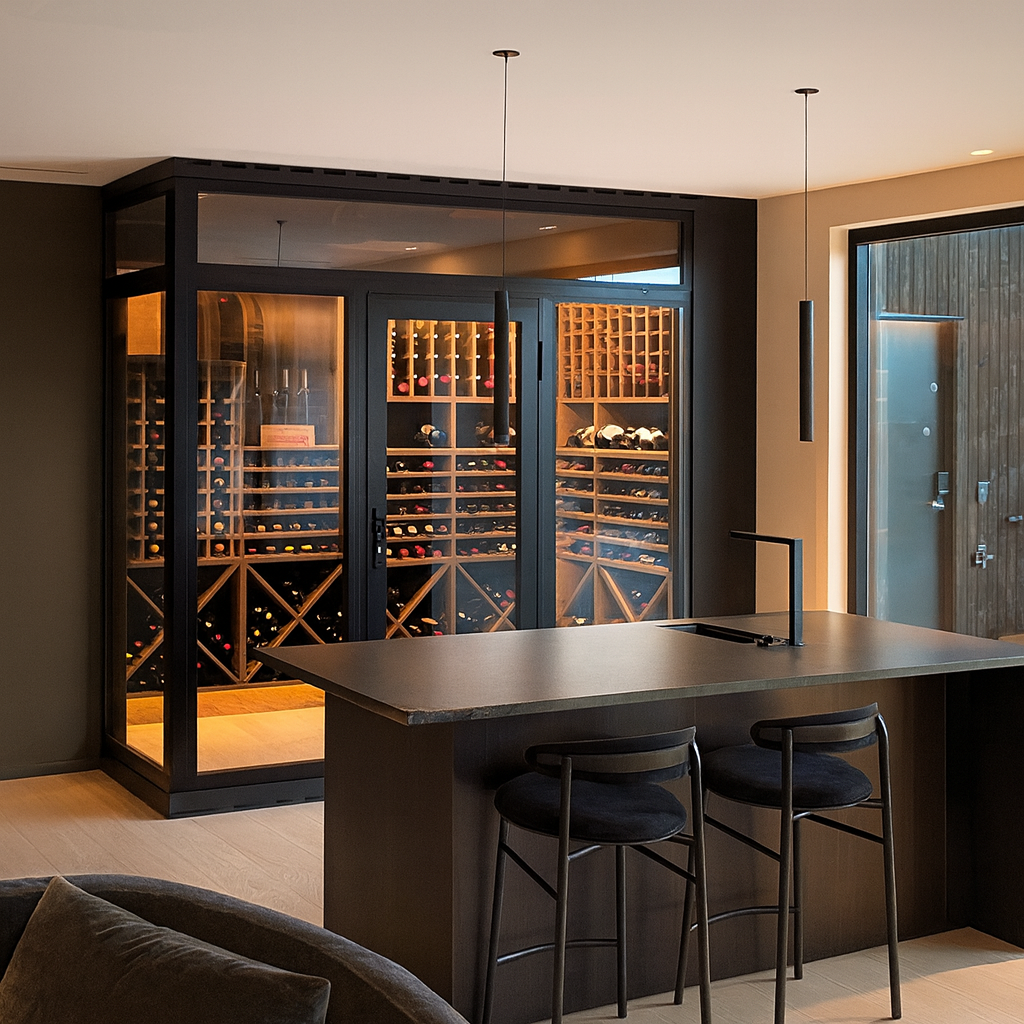

The complete recipe for what to consider when building a wine room!
The difference between storing and preserving wine